
Call us now :08071792069
 Send Inquiry
 Send Inquiry
Ingress Protection (IP) Testing in Surat
Ingress Protection (IP) Testing in Surat Specification
- Service Frequency
- On Demand / Project Based
- Testing Method
- Laboratory and On-site Testing
- Certification Service Type
- Ingress Protection (IP) Testing
- Industry Served
- Automotive, Industrial Equipment, Consumer Electronics, Lighting
- Service Location
- India
- Testing Standards
- IEC 60529
- Location
- Surat
- Applicable Products
- Electrical, Electronic, and Mechanical Enclosures
- Testing Equipment
- Certified IP Test Chambers and Instruments
- Sample Size Requirement
- As per IEC requirements
- Documentation Provided
- Detailed Test Report and Certification
- Turnaround Time
- 7-10 working days
- IP Rating Types Tested
- IPX1 to IPX9K
Ingress Protection (IP) Testing in Surat Trade Information
- Main Domestic Market
- All India
About Ingress Protection (IP) Testing in Surat
IP, standing for an Ingress Protection is often found in the form of a table. An IP rating is a measure of an enclosure or cases ability to resist items entering it. This could be large items such as a hand, or small items such as dust, or even water. If you would like IP ratings explained in full, this blog will provide you with all the information you need. Otherwise known as Ingress Protection. An IP certification rating table or chart, has been constructed by the International Electrotechnical Commission (IEC) for international use. EN 60529 is the subsequent British standard. IP Ratings are classified by categorical codes. These, in turn, summarise the scale of protection offered from estranged articles such as, substantial objects, dirt and moisture. How the Coding Works, The two digits of IP ratings explained, The IEC standard 60529 provides you with a more detailed guide than more generic marketing terms often applied when talking about water resistance. This means you can determine the exact levels of protection against moisture. Instead of an item simply being waterproof. An IP rating is, in summary, a two digit code. The first digit establishes the level of protection against intrusion of foreign bodies. The second the resistance against moisture intrusion. Together, this informs you of precise the level of protection that will be offered by the specific case or enclosure. Any product with an IP rating must withstand an assortment of tests. These tests determine the items efficiency in a range of circumstances. Ultimately, an IP rating allows to you be able to make an educated choice regarding the appropriateness of the products suitability for your specific application. Detailed information on IP rating classifications, Below, which specify what each digit in the IP level relates to.0,No protection.1,Objects greater than 50mm,Protects from large parts of the body such as the back of the hand but, will not protect deliberate contact with body parts.2,Objects greater than 12.5 mm, Protects against fingers and objects of a similar size to the fingers.3,Objects greater than 2.5mm,Tools and thick cables are included in this level.4,Objects greater than 1 mm, Includes most wires, screws and large ants or small insects.5,Dust protected, Some protection from dust as long as its not exposed to a large quantity,6,Dust tight A vacuum must be applied and will protect against contact of dust. Designation of additional information, In addition to the tables above, the IEC also make use of additional letters to provide further related information. This information details the protection of the device. A breakdown of these letters and their meanings are as follows, F, Oil resistance, H, High voltage device, M, Device moving during water test, S, Device moving during water test, W, Weather conditions. All electrical devices that have an IP rating will have a two digit rating as we mentioned before.1. IP68, If a device has a rating of IP68, for example, the device will be dust tight and protected against long periods of immersion in water under pressure. This example is both dust tight and watertight according to the standards set up in the IP rating.2. IP34, Lets look at another example, how about IP34.This device would be protected against larger solid objects, something over 2.5mm, and protected against water sprayed from all direction. With this rating, the device would most likely need to be in some sort of enclosure because the solids protection is only against large objects.3. IP61 Lets look at a final example, IP61.Here there is full dust protection but the only liquid protection is for vertically falling drops of water.
Product details
| Testing For | Ingress protection( Liquid & solid particales ) |
| Technique | IEC60529 |
| Device/Equipment Type | Any |
| Property Size | IEC60529 |
| Number Of Devices | 1 |
| Usage/Application | Any |
Comprehensive IP Testing Services in Surat
This service delivers specialized ingress protection (IP) testing both in laboratory settings and on-site, tailored to the needs of manufacturers and suppliers across India. Enclosures for electrical, electronic, and mechanical products are tested against IEC 60529 standards, ensuring compliance from basic dust and water resistance (IPX1) up to the stringent IPX9K classification. Sample requirements adhere to IEC specifications, guaranteeing accurate and reliable results.
Certified Test Equipment and Documentation
Only certified IP test chambers and precision instruments are employed during testing, ensuring each product is evaluated with technologically advanced and calibrated equipment. Following completion of IP tests, the service provider issues detailed test reports along with certification, supporting regulatory compliance, market entry, and quality assurance for your products and projects.
Industries Served and Flexible Testing Locations
The IP testing service caters to automotive, industrial equipment, lighting, and consumer electronics sectors, among others. Testing can be conducted at your site in Surat or in a state-of-the-art laboratory. Service frequency is flexible, with options for one-off project-based assessments or regular, on-demand testing to fit your business requirements.
FAQ's of Ingress Protection (IP) Testing in Surat:
Q: How does IP testing work for electrical, electronic, and mechanical enclosures in Surat?
A: IP testing is performed using certified IP test chambers and instruments, either in a laboratory or at your site. Enclosures undergo evaluations as per IEC 60529 to determine their resistance to dust, water, and other ingress factors. Testing covers ratings from IPX1 to IPX9K.Q: What is the typical turnaround time for Ingress Protection testing services?
A: The standard turnaround time for IP testing in Surat ranges from 7 to 10 working days, depending on sample size, product complexity, and scheduling. Expedite options may be available for urgent projects.Q: When should a company opt for on-site versus laboratory IP testing?
A: On-site IP testing is ideal for larger or installed equipment that cannot be easily transported to a lab, or when immediate evaluation at your facility is preferred. Laboratory testing suits most enclosure samples and allows for controlled, repeatable test conditions.Q: Where are IP testing services available in India?
A: Service providers offer IP testing in Surat and across multiple locations in India, ensuring nationwide coverage. Both laboratory and on-site testing are available to accommodate various industry needs.Q: What benefits does IP certification provide for my products?
A: IP certification supports market access, regulatory compliance, and assurance for your clients regarding enclosure durability and safety. A certified IP rating enhances product credibility and consumer confidence.Q: What type of documentation is provided after IP testing?
A: After testing, you receive a detailed test report along with formal certification, documenting all procedures, findings, and compliance with IEC 60529. This aids product approval and enhances quality assurance processes.Q: How is sample size determined for IP testing?
A: Sample size requirements are set according to IEC standards and vary based on product type and desired IP rating. Service providers offer guidance to ensure proper sample submission for accurate, reliable test results.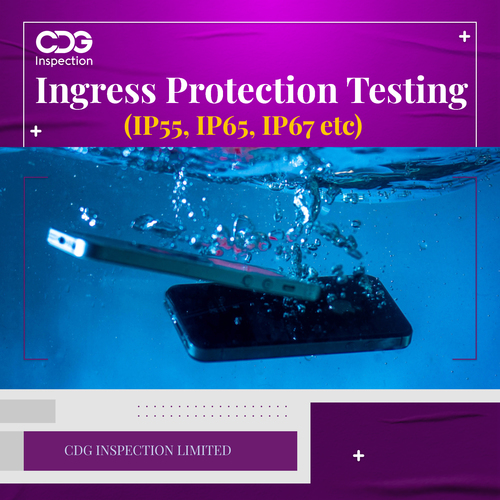
Tell us about your requirement

Price:
Quantity
Select Unit
- 50
- 100
- 200
- 250
- 500
- 1000+
Additional detail
Mobile number
Email

More Products in Ingress Protection (IP) Testing Category


 Send Inquiry
Our Products
- Quality Inspection
- Compliance Audit
- BIFMA Testing
- Registration/CoC
- Fire Safety Audit
- Electrical Safety Audit
- Pre-Shipment Inspection
- Third Party Inspection
- C-TPAT Audit
- Ingress Protection (IP) Testing
- Food Grain Inspection
- Oil & Fats Inspection
- Raw & Refined Sugar Inspection
- Animal Feed Inspection
- Factory Compliance Audit
- Industrial Safety Audit
- Green Audit Services
- Garment Inspection Services
- Container Loading Supervision
- Workplace Safety Audit
- ISO 17712 Testing & Certification
- Social Compliance Audit
- Fire Door Inspection
- Mechanical Security Seal Inspection & Testing
- Impact Protection Rating
- Electrical Testing Services

Plot No.- 37, IMT Manesar, Gurugram - 122051, Haryana, India

Mr. A. K. B
(a)
Mobile :08071792069
 Send Inquiry
 Send SMS
Developed and Managed by Infocom Network Private Limited.


