
Call us now :08071792069
 Send Inquiry
 Send Inquiry
Factory Compliance Audit In Agra
Factory Compliance Audit In Agra Specification
- Comprehensive Corrective Action Plan
- Provided After Audit
- Onsite Duration
- Typically 1-3 Days
- Audit Standard References
- SA 8000, ISO 14001, ISO 45001, BSCI, SEDEX
- Service Type
- Factory Compliance Audit
- Location
- Agra
- Industry Application
- Manufacturing/Export Units
- Team Expertise
- Experienced Compliance Auditors
- Audit Frequency
- One-time/Periodic
- Audit Coverage
- Labour Law, EHS, Social Accountability
- Mode of Report
- Detailed Documentation
- Customization
- Available as per client requirements
- Service Availability
- Pan India
- Reporting Language
- English/Hindi
- Confidentiality Assurance
- Yes
Factory Compliance Audit In Agra Trade Information
- Main Domestic Market
- All India
About Factory Compliance Audit In Agra
CIL Provides Accredited Factory Compliance Audit Services in Agra, Uttar Pradesh, India. A compliance audit is a formal review of an organizations procedures and operations mainly focusing on whether an entity is complying with internal rules, regulations, policies, decisions, and procedures. An audit report will cover the resilience of compliance preparations, security policies, risk management processes, and user access controls observed during the audit. A compliance audit assesses how well an organization adheres to internal bylaws, rules and regulations, standards, and even codes of conduct. An audit also reviews the effectiveness of an organizations internal controls using multiple types of audits. External agencies such as regulatory bodies too conduct compliance audits to assess a business adherence to regulations governing that industry. Internal Audits, Internal audits enable an organization to follow processes, procedures, and guidelines. On the other hand, a compliance audit ensures that the organization is fulfilling outside obligations such as agreements, rules and regulations, or standards. Internal audits may be financial, operational, IT, or regulatory, but are conducted using formal audit approaches prior to an outside compliance audit to ensure that the organization is following the standards. Compliance Audits, Compliance audits are different from internal audits. Compliance audits are outward facing, ensuring that the company complies with regulations or codes of conduct. Both internal and compliance audit functions share the same language and even software to make sure that reviews are holistic. Operational Audits, Operational audits identify how effective and efficient various departments and activities are and whether these areas operate in line with the mission and purpose of the organization. Audit monitoring help organizations to validate processes including, The security of critical data. The records of financial departments. Health and safety. Payroll and HR policies. Management standards. How are Compliance Audits Conducted? Audit strategy and plan. In the planning phase, auditors review the internal controls and institutional arrangements to prevent, detect, and rectify instances of non compliance before they start gathering audit evidence. These are a few steps in a compliance audit, After connecting with the auditor, the organization decides if the auditors expertise is a good fit. At a preliminary meeting, the auditor explains the audit guidelines and what is required. The auditor may provide auditing checklists so that the client can prepare. Once the organization completes audit questionnaires and supplies the auditor with the needed documents, the auditor may work on site to view documents, walk through the workspaces, study infrastructure and security features, and interview management and employees. The report should be delivered within a comparatively short time. At the final meeting, the auditor discusses the report and makes recommendations to address any areas of risk. Whether working under a regulatory deadline or not, organizations should generally rectify any deficiencies within 120 days to ensure that they have completed the corrective actions. Sometimes, auditing firms do follow up support to help organizations rectify any risks or deficiencies. Auditors then validate and verify whether those measures have been met. The Importance of Compliance Auditing , Compliance auditing, whether internal or external, enables a company to identify weaknesses in regulatory compliance processes and create ways for improvement. Sometimes, guidance determined by a compliance audit can help reduce risk while also avoiding potential risks or federal fines for noncompliance. Compliance auditing provides an outline of the internal business processes that can be improved or changed according to changes in regulations and requirements.Tailored Audit Solutions for Every Factory
With flexibility at the core of our approach, audits are customized to meet the specific requirements of each client. Whether you operate a manufacturing or export unit, our team adapts processes and reporting to suit your operational goals, ensuring compliance and actionable insights.
Comprehensive Audit Standards and Coverage
Our audits are guided by internationally recognized standards such as SA 8000, ISO 14001, ISO 45001, BSCI, and SEDEX. We cover essential compliance areas including labor law, environment, health and safety, and social accountability, helping your factory maintain industry-leading practices.
FAQ's of Factory Compliance Audit In Agra:
Q: How is the Factory Compliance Audit in Agra customized for each client?
A: Our audit services are fully adaptable, allowing us to address the unique compliance needs of each client. We can focus on specific regulations, standards, or operational areas as requested, ensuring the process aligns with your business and industry requirements.Q: What standards and areas does the audit cover?
A: The audit references prominent international standards such as SA 8000, ISO 14001, ISO 45001, BSCI, and SEDEX, and encompasses labor law compliance, environmental health and safety (EHS), and social accountability.Q: When can I schedule the audit, and how long does it typically take?
A: You can request an audit at any time, and our team is available throughout India. Most onsite audits in Agra are completed within 1 to 3 days, depending on the factory's size and specific requirements.Q: Where is the Factory Compliance Audit service available and conducted?
A: While based in Agra, our audit services are offered pan India, ensuring flexibility for clients with multiple sites or those operating outside the city.Q: Can I choose the audit language and receive a detailed report?
A: Yes, reports are provided in either English or Hindi based on your preference, and come in comprehensive, detailed documentation covering all audit findings and suggestions for improvement.Q: What is included in the post-audit corrective action plan?
A: After each audit, you receive a tailored corrective action plan addressing all observed non-compliances, with practical recommendations to achieve full regulatory and standard adherence.Q: What benefits does a Factory Compliance Audit provide to my company?
A: The audit enhances regulatory compliance, reduces risk of penalties, improves workplace safety, and bolsters your factory's reputation for responsible practices, aiding in client confidence and potential access to global markets.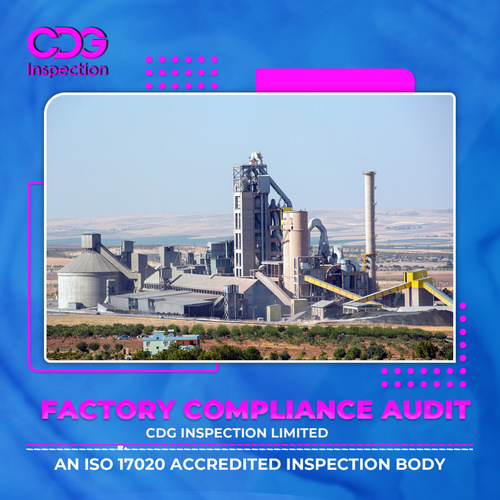
Tell us about your requirement

Price:
Quantity
Select Unit
- 50
- 100
- 200
- 250
- 500
- 1000+
Additional detail
Mobile number
Email

More Products in Factory Compliance Audit Category

 Send Inquiry
Our Products
- Quality Inspection
- Compliance Audit
- BIFMA Testing
- Registration/CoC
- Fire Safety Audit
- Electrical Safety Audit
- Pre-Shipment Inspection
- Third Party Inspection
- C-TPAT Audit
- Ingress Protection (IP) Testing
- Food Grain Inspection
- Oil & Fats Inspection
- Raw & Refined Sugar Inspection
- Animal Feed Inspection
- Factory Compliance Audit
- Industrial Safety Audit
- Green Audit Services
- Garment Inspection Services
- Container Loading Supervision
- Workplace Safety Audit
- ISO 17712 Testing & Certification
- Social Compliance Audit
- Fire Door Inspection
- Mechanical Security Seal Inspection & Testing
- Impact Protection Rating
- Electrical Testing Services

Plot No.- 37, IMT Manesar, Gurugram - 122051, Haryana, India

Mr. A. K. B
(a)
Mobile :08071792069
 Send Inquiry
 Send SMS
Developed and Managed by Infocom Network Private Limited.


