
Call us now :08071792069
 Send Inquiry
 Send Inquiry
Food Grain Inspection in Karnal
Food Grain Inspection in Karnal Specification
- Reporting Format
- Hard Copy and Digital PDF
- Application/Usage
- Quality Control, Compliance, Export, Storage Assurance
- On-site/Off-site
- On-site Inspection Available
- Report Delivery Time
- Within 24-48 hours
- Inspection Method
- Visual Inspection, Laboratory Testing, Sampling
- Lab Accreditation
- NABL Accredited
- Sampling Methods
- Random and Stratified Sampling
- Minimum Order Quantity
- 1 Inspection
- Inspection Frequency
- As per client requirement
- Type Of Service
- Food Grain Inspection
- Service Mode
- Offline
- Certification Standard
- FSSAI, ISO 22000, AGMARK
- Location
- Karnal
- Inspection For
- Wheat, Rice, Pulses, Other Grains
Food Grain Inspection in Karnal Trade Information
- Main Domestic Market
- All India
About Food Grain Inspection in Karnal
CIL provides accredited food grain inspection services in Karnal, Haryana, India. On farm grain testing is a way for farmers to improve their quality control, develop marketing strategies and maximise their returns. Now is an ideal time for farmers to adopt this approach, as technological advance means that on farm grain testing is fast, convenient and easy to do. Supporting Quality Control With On farm Grain Testing. In the farming calendar, harvest has a high importance. For farmers, the quality of their crop is vital for ensuring a good yield, and maximising their profits. Grain testing is a vital aspect of food production, and grain quality can have an impact throughout the food chain, from producers and suppliers through to retailers and consumers, Grain needs to meet certain standards, and to meet these, farmers must harvest crops carefully, store them in optimum conditions, and measure their yields accurately. There are various parameters that farmers can test grain for, Moisture, Weight, Protein and oil content. On farm Testing for Better Grain Marketing, Farmers are finding that good, accurate grain testing is financially worthwhile. Storage conditions will have a big influence on the quality of grain, and what farmers can expect suppliers to pay for their yields. Moisture is a critical factor ingrain storage, weight and overall quality. By doing their own on farm grain testing, farmers can ensure that they provide a consistent environment for grain, controlling temperature and humidity levels. Having access to technology that gives accurate readings on moisture, protein and specific weight in only minutes provides farmers with a useful tool for optimising grain storage conditions. By testing grain, farmers can determine which batches will be best suited to specific markets. And they can adjust their production to appeal to these markets. For larger farms, modern grain testing technology makes this kind of accurate marketing far more achievable, because testing is easy to carry out, the results are rapid, and they are reliable. Avoiding Unnecessary Costs, Reliable testing helps farmers avoid unnecessary costs. Transporting grain is another expense, and more so if then the shipment is given reduced value on arrival, or worse, if it is returned. By putting in place reliable analysis procedures much earlier in the process, farmers can save themselves money, as well as ensure the quality of their product. Improving Industry Standards, On farm grain testing can help drive up quality across the entire industry. The Agricultural Industries Confederation (AIC) is encouraging farmers to take their own grain samples. This is partly in response to health concerns from Covid 19, but also with the aim of standardising approaches to the drawing and collecting of samples. Technology like the CIL Wholegrain Analyser can take this further, giving farmers the capability to both take and test grain samples on farm. State of the art grain testing methods involve near infrared reflectance (NIR) analysis. This is based on the naturally occurring electromagnetic spectrum and it tests for the main constituents in grains. As a grain testing method, it provides rapid analysis, with reliable and precise results and does not require adding any chemicals as part of the test. NIR analysis is a spectroscopic technique, directing near infrared light onto a grain sample. A calibration process modifies this light according to the makeup of the grain sample, to provide useful information about its composition. For grain analysis, the type of NIR process is known as reflectance. Light reflects back from the grain sample, which allows for analysis of the samples absorbent qualities. NIR penetrates deep into the sample to analyse its internal makeup, but it does not affect the sample in any way. It is a non destructive method of analysis. User friendly Testing Technology, CIL instruments are leading edge tools for grain analysis. They represent a significant advance in analyser technology, and they are built to be portable and highly functional for on farm use. But while the technology driving the wholegrain analyser is advanced, the device itself is designed to be user friendly. The Wholegrain Analyser has a large colour touch screen for easy access to intuitive menus for operating the instrument and reading the results of its analysis.
Certified Food Grain Inspection
We offer certified grain inspections in Karnal, adhering to FSSAI, ISO 22000, and AGMARK standards. Every inspection is performed by skilled professionals in NABL-accredited laboratories, ensuring that your grains meet regulatory and quality requirements for export, storage, and domestic use.
Comprehensive Sampling and Testing
For reliable results, we employ random and stratified sampling techniques during inspections. Visual checks and detailed laboratory testing are integral to our process, allowing us to identify contaminants, moisture, and quality variations swiftly and accurately.
Swift and Flexible Reporting
Our reporting system is designed for convenience, delivering inspection results within 24-48 hours. You receive comprehensive reports in hard copy and digital PDF formats. Inspection frequency and scheduling are entirely based on your specific needs, ensuring maximum control and flexibility.
FAQ's of Food Grain Inspection in Karnal:
Q: How is the food grain inspection conducted in Karnal?
A: Inspections are performed on-site using visual examination and laboratory testing. Samples of wheat, rice, pulses, and other grains are collected using random and stratified sampling methods to ensure representative results.Q: What certification standards are met during the inspection process?
A: We inspect grains in compliance with FSSAI, ISO 22000, and AGMARK standards. All laboratory analyses are completed in NABL-accredited facilities for the highest reliability and acceptance in regulatory, export, and storage contexts.Q: When will I receive the inspection report after sample collection?
A: Inspection results and detailed reports are delivered within 24-48 hours of sample collection. Clients receive both hard copy and digital PDF formats for easy access and record keeping.Q: Where does the inspection service operate, and is it available on-site?
A: Our service is based in Karnal and provides on-site inspections at your location. This ensures immediate and accurate sample collection and assessment.Q: What is the process for booking a food grain inspection in Karnal?
A: Clients can arrange inspections with a minimum order of one inspection. Service frequency and timing are customized according to the client's specific requirements for quality control, export, or storage assurance.Q: How can grain inspection benefit my business or operation?
A: Inspection validates grain quality, ensures compliance with national and export standards, prevents losses during storage, and supports better market credibility. Reports provide actionable insights for compliance and operational improvements.Q: What grains and inspection methods are covered under this service?
A: We inspect wheat, rice, pulses, and other grains using visual checks, laboratory analysis, and methodical sampling. This ensures comprehensive quality verification tailored to each type of grain inspected.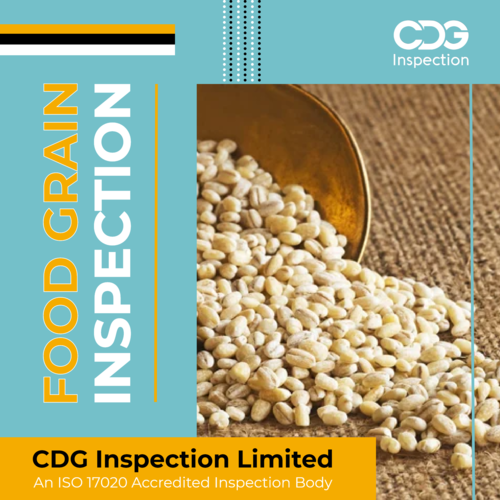
Tell us about your requirement

Price:
Quantity
Select Unit
- 50
- 100
- 200
- 250
- 500
- 1000+
Additional detail
Mobile number
Email

More Products in Food Grain Inspection Category

 Send Inquiry
Our Products
- Quality Inspection
- Compliance Audit
- BIFMA Testing
- Registration/CoC
- Fire Safety Audit
- Electrical Safety Audit
- Pre-Shipment Inspection
- Third Party Inspection
- C-TPAT Audit
- Ingress Protection (IP) Testing
- Food Grain Inspection
- Oil & Fats Inspection
- Raw & Refined Sugar Inspection
- Animal Feed Inspection
- Factory Compliance Audit
- Industrial Safety Audit
- Green Audit Services
- Garment Inspection Services
- Container Loading Supervision
- Workplace Safety Audit
- ISO 17712 Testing & Certification
- Social Compliance Audit
- Fire Door Inspection
- Mechanical Security Seal Inspection & Testing
- Impact Protection Rating
- Electrical Testing Services

Plot No.- 37, IMT Manesar, Gurugram - 122051, Haryana, India

Mr. A. K. B
(a)
Mobile :08071792069
 Send Inquiry
 Send SMS
Developed and Managed by Infocom Network Private Limited.


