
Call us now :08071792069
 Send Inquiry
 Send Inquiry
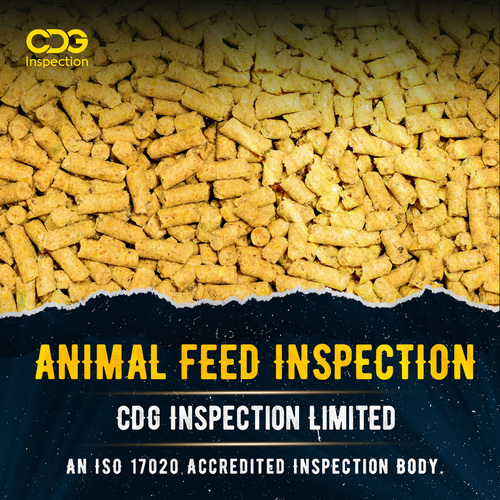
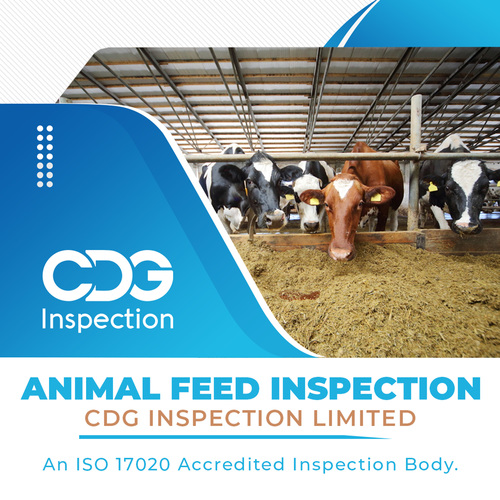
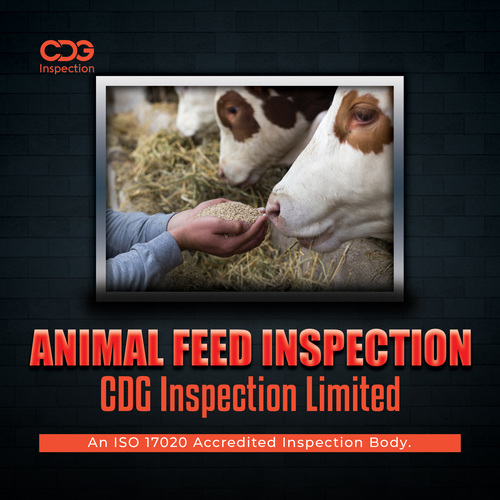
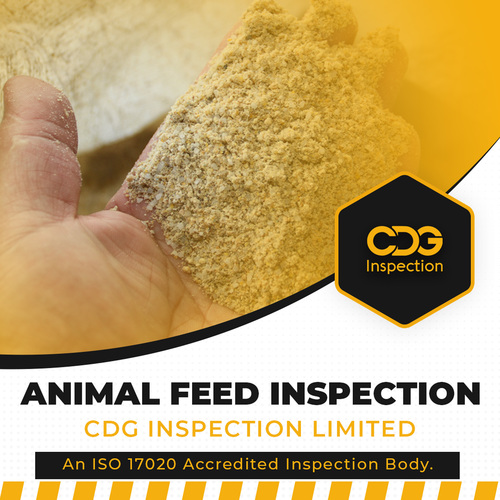
Animal Feed Inspection Services in Noida
Animal Feed Inspection Services in Noida Specification
- Mode of Service
- Offline
- Turnaround Time
- Within 2-5 Working Days
- Sampling Method
- Random/Composite Sampling
- Report Delivery
- Hard Copy and Email
- Service Location
- Noida
- Applicable Feed Types
- Cattle, Poultry, Fish, Pet Feed
- Quality Parameters Tested
- Nutritional Content, Contaminants, Adulteration, Physical Properties
- Field Support
- Available Upon Request
- Service Type
- Animal Feed Inspection Services
- Inspection Standard
- ISI/ISO Certified Methods
- Duration
- As per Requirement
Animal Feed Inspection Services in Noida Trade Information
- Payment Terms
- Cheque
- Main Domestic Market
- All India
About Animal Feed Inspection Services in Noida
CIL Provides Accredited Animal Feed Inspection Services in Noida, Uttar Pradesh, India.Feed quality control programs must blend these tools todeliver feeds that consistently contain the formulated nutrients in anavailable form and contain minimal levels of toxic substances. The AmericanFeed Industry Assn (AFIA) has defined feed quality control programs as, Allactions directed towards ensuring the product meets the specificationsestablished by the manufacturer. Andrews (1991b) has described feed quality controlprograms as, A system for making sure that proper standards are maintainedthrough use of periodic inspections. Any good feed quality control programcontains four components, Ingredient quality, Process control, Finished feedquality, and Control of toxic substances, including pathogenic micro organisms.Since actual quality control policies and procedures must be adapted to theneeds of each facility, this article will focus on the basics of feed quality controlprograms rather than on specifics in the hope that the discussion will stimulatethinking and innovation in the field of feed quality control. Ingredientquality, Since many of the major feed ingredients are by products from otherindustries, feed manufacturers often find themselves in an underdog sort ofposition in respect to ingredients and ingredient quality. Consequently, feedmanufacturers many times find themselves in the position of trying to makesomething good out of someone else dregs. Ingredients can account for 70 to 90 percentof the cost of producing feeds (Jones, 1989). Furthermore, as feed mills getlarger, the percentage of the total cost accounted for by ingredients will tendto rise. Not only does it make good economic sense to pay attention toingredient quality, but a large portion of the variation in the nutrientcontent of finished feeds can be traced to ingredients. In fact, one poultrycompany was able to associate ingredients with 40 to 70 percent of thevariation in nutrient content of the finished feeds (Jones, 1989). Nutrientcontent variations violate the primary objective of feed manufacturing and costin terms of performance. What is quality, Quality has been defined by variousindividuals as fitness for use or meeting an expectation or degree ofexcellence or conforming to a standard. Although near infraredspectrophotometry (NIRS) is used by a significant number of manufacturers torapidly determine the moisture, fat, protein and fiber content of an ingredientsample, many feed manufacturers do not analyze ingredients prior to use. Hence,most manufacturers operate on supplier histories. Therefore, predictability isimportant with respect to feed ingredients and it must be concluded that high qualityingredients are predictable and constant in quality. Said another way, high qualityingredients meet expectations not just some of the time, but most of the time. Itshould be obvious from the preceding discussion that the first priority in theproduction of quality feed is to understand and define ingredient quality inspecific terms. This means that ingredients must be described in two ways.First, they must be described in terms of analytical values and second, theymust be described in terms of physical and or sensory characteristics. Thefirst depiction describes ingredients in terms that analytical chemistsunderstand, while the second describes ingredients so that the unloading ormill personnel can make decisions about ingredient quality. AFIA publishes abook titled Feed Ingredient Guides II that describes the colour, odour, textureand test weight of feed ingredients. It might also be wise to provide theperson receiving ingredients with a set of reference samples that includeexamples of both desirable ingredients and undesirable ingredients.Ingredient qualityprograms that stop with physical or sensory definitions of quality generally donot consistently obtain quality ingredients. More objective means ofdetermining quality must be used as the ultimate judgement of ingredientquality. This objective determination is, obviously laboratory testing andanalysis. While method description is not the objective of this article, it isimportant to be reasonably certain that laboratory results are reliable.
Comprehensive Animal Feed Testing
Our service covers a spectrum of animal feeds, from cattle to fish and pet feed. Using industry-recognized ISI/ISO certified methods, we offer detailed testing for contaminants, nutritional value, adulteration, and physical properties, maintaining high standards of animal health and feed safety.
Flexible Sampling & Rapid Reporting
We employ random and composite sampling procedures, ensuring representative results. The entire inspection process is streamlined for efficiency, with reports delivered in both hard copy and email within 2-5 working days, supporting swift decision-making for your operations.
On-Site Support & Personalized Service
With a dedicated field support team in Noida, we can assist directly at your location if requested. Our service is tailored to client needs and offered offline, with flexible duration to match your specific requirements, providing holistic solutions for animal feed quality assurance.
FAQ's of Animal Feed Inspection Services in Noida:
Q: How are the animal feed samples collected during inspection?
A: Samples are collected using random or composite sampling techniques to ensure they statistically represent the entire feed batch. This approach minimizes bias and provides accurate testing results for cattle, poultry, fish, and pet feeds.Q: What types of animal feed do you inspect under this service?
A: We provide inspection services for a wide variety of animal feeds, including those formulated for cattle, poultry, fish, and pets. Each type is tested according to relevant ISI/ISO certified standards.Q: When can I expect to receive the inspection report?
A: You will receive the detailed inspection report within 2-5 working days after sample collection. Reports are issued in both hard copy and email, ensuring convenient and timely access to results.Q: Where are these animal feed inspection services available?
A: Our services are available in Noida, with field support accessible at your specific site whenever required. We aim to deliver an efficient offline service tailored to feed producers and suppliers in the region.Q: What quality parameters are tested during the inspection?
A: We assess a range of quality factors, including nutritional content, physical properties, potential contaminants, and adulteration to ensure the feed meets established safety standards for animals.Q: How does the inspection process benefit my business?
A: Our inspection ensures your animal feed complies with regulatory and quality standards, enhances animal health, reduces the risk of feed-related issues, and helps maintain your reputation as a trusted feed supplier.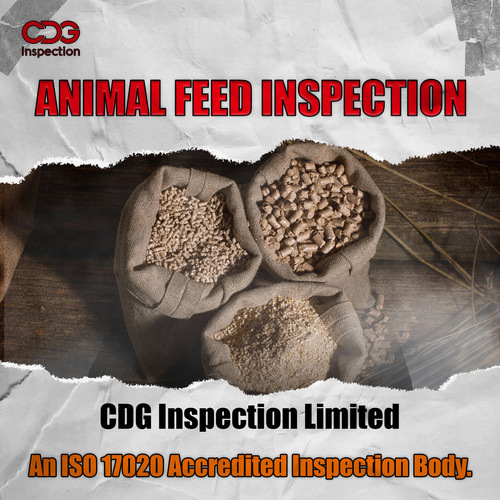
Tell us about your requirement

Price:
Quantity
Select Unit
- 50
- 100
- 200
- 250
- 500
- 1000+
Additional detail
Mobile number
Email


 Send Inquiry
Our Products
- Quality Inspection
- Compliance Audit
- BIFMA Testing
- Registration/CoC
- Fire Safety Audit
- Electrical Safety Audit
- Pre-Shipment Inspection
- Third Party Inspection
- C-TPAT Audit
- Ingress Protection (IP) Testing
- Food Grain Inspection
- Oil & Fats Inspection
- Raw & Refined Sugar Inspection
- Animal Feed Inspection
- Factory Compliance Audit
- Industrial Safety Audit
- Green Audit Services
- Garment Inspection Services
- Container Loading Supervision
- Workplace Safety Audit
- ISO 17712 Testing & Certification
- Social Compliance Audit
- Fire Door Inspection
- Mechanical Security Seal Inspection & Testing
- Impact Protection Rating
- Electrical Testing Services

Plot No.- 37, IMT Manesar, Gurugram - 122051, Haryana, India

Mr. A. K. B
(a)
Mobile :08071792069
 Send Inquiry
 Send SMS
Developed and Managed by Infocom Network Private Limited.


