
Call us now :08071792069
 Send Inquiry
 Send Inquiry
ISO 17712 Testing And Certification
Price 150000 INR/ Piece
MOQ : 1 Piece
ISO 17712 Testing And Certification Specification
- Language of Report
- English
- Applicable Seal Types
- High Security Seals, Bolt Seals, Cable Seals
- Testing Capacity
- Up to Bulk Quantities
- Industry/Application
- Container, Cargo, Logistics
- Certificate Delivery Time
- Within 5-7 Working Days
- Clientele
- Shipping Companies, Manufacturers, Importers, Exporters
- Service Location
- Pan India and International
- Sample Requirement
- Required for Testing
- Accreditation
- ISO/IEC 17025 Accredited Laboratory
- Certification Method
- Lab Testing and Evaluation
- Testing Type
- Security Seal Testing
- Certification Type
- ISO 17712 Testing And Certification
- Mode of Report
- Hard Copy, Soft Copy (PDF)
- Standard
- ISO 17712
- Testing Parameters
- Physical Strength, Tamper Resistance, Identification
- Validity
- As Per ISO 17712 Guidelines
ISO 17712 Testing And Certification Trade Information
- Minimum Order Quantity
- 1 Piece
- Main Domestic Market
- All India
About ISO 17712 Testing And Certification
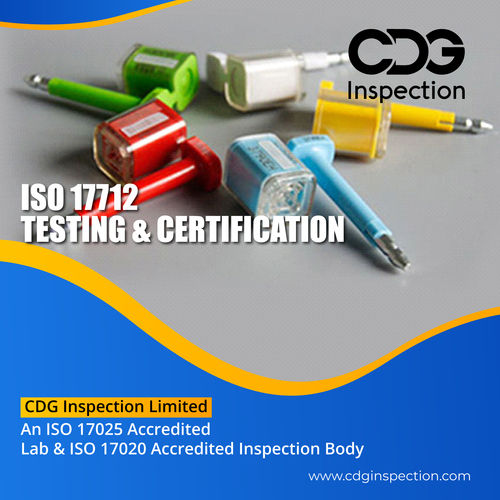
The International Standards Organization ISO establishes testing standards on a wide variety of products. ISO 17712 pertains to mechanical security seals, which are classified into 3 groups, High Security Seals, Security Seals, Indicative Seals. The standard is a copyrighted product of the International Standards Organization ISO. The information presented below is intended to provide seal consumers with a general understanding of the ISO17712 standard. The information is a paraphrased summary of the key sections of the standard with a focus on the MINIMUM requirements for high security seals such as bolt seals, cable seals and barrier seals. These seals are designed to provide the most security. The most common high security seals are bolt seals typically 7mm diameter or more, cable seals typically 3.5mm diameter minimum and barrier seals. These seals also serve as barriers since they require special tools heavy duty bolt cutters, cable cutters or cutting wheels to remove the seals. Typical applications include placing a bolt seal or cable seal in the hasp of the doorlatch. Other common practices are to wrap the keeper bars of a shipping container or truck trailer with a long cable seal or use a barrier seal also known as a keeper bar lock. The Customs Trade Partnership Against Terrorism CTPAT is a joint effort between the United States government and businesses involved in importing goods into the United States. One of the CTPAT guidelines is to use seals rated High Security for international shipments which cross borders.ISO17712 Requirements for High Security Seals, Section 4.2.1, All high security seals must be permanently marked with the manufacturer name or logo and uniquely numbered. Section 4.2.2, All high security seals must be marked with an H to designate the high security classification. Section 4.4.1, All high security seals shall be designed to mitigate tampering and leave evidence if tampered. The seal manufacturer will also certify in writing that they conduct periodic tamper evident testing on their seals in conjunction with an accredited process review organization. Section 5.1.2, All high security seals must be tested by an independent testing lab to successfully pass minimum levels for tensile, shear, bending, and impact. Seals are tested as sold. The independent lab testing must be completed AT LEAST every 24 months to verify seals are still in compliance, or sooner if there is a significant design change in the seal. All of Nova Visions high security seals meet the requirements for ISO 17712. The links to our certifications can be found on the respective product pages. These are mid level security devices which are lower cost than High Security Seals, but offer a higher break strength than Indicative Seals. The higher break strength assures the seals are durable for the application and not prone to breaking unintentionally. These seals typically include lower diameter cable seals 3mm diameter and less and the high strength plastic seals. These seals are typically removed with cable wire cutters or other light weight tools. These devices offer the lowest level of security. They are intended to show tampering, but are not intended to be a barrier for access. This category typically includes metal, plastic, or wire seals which can be pulled apart by hand or cut with a tin snips or scissors. CDG provide accredited ISO 17712 testing & certification services in India.Comprehensive Security Seal Evaluation
Adhering to ISO 17712 standards, our testing and certification cover high security, bolt, and cable seals to ensure your cargo's protection. We evaluate your samples for strength, tamper evidence, and identification features, promising reliability for all logistics and shipping stakeholders. Our accredited laboratory handles bulk quantities efficiently, ensuring timely and trusted support for manufacturers, exporters, and shipping companies.
Fast and Reliable Certification Delivery
We understand the importance of timely documentation for business operations. Receive your ISO 17712 certification within 5-7 working days, provided conveniently as both hard copy and digital PDF formats. Our processes are streamlined to minimize delay while upholding ISO/IEC 17025-accredited quality standards. Clients across India and overseas benefit from accessible, multilingual support and standardized English-language reports.
FAQ's of ISO 17712 Testing And Certification:
Q: How does the ISO 17712 testing and certification process work?
A: The process begins when you provide samples of high security, bolt, or cable seals for testing. Our ISO/IEC 17025-accredited laboratory evaluates your seals for compliance with ISO 17712 standards, focusing on physical strength, tamper resistance, and identification. Upon successful completion, you receive a detailed report and certificate in both hard copy and PDF within 5-7 working days.Q: What types of seals are eligible for ISO 17712 testing and certification?
A: We certify a range of high security seals, including bolt and cable seals, as specified by ISO 17712. These seals are commonly used for containers, cargo, and logistics applications, helping to protect valuable shipments from tampering or unauthorized access.Q: When can I expect to receive the ISO 17712 certificate?
A: Certification is typically delivered in 5-7 working days after we receive and test your seal samples. You will receive both a hard copy by mail and a digital PDF version, ensuring you have quick and easy access to your certification documentation.Q: Where can your ISO 17712 testing and certification service be accessed?
A: Our service is available throughout India and internationally. We serve a broad clientele, including shipping companies, manufacturers, importers, and exporters across multiple countries, making our certification widely recognized and accepted.Q: What are the usage benefits of obtaining ISO 17712 certification for my seals?
A: Having ISO 17712-certified seals demonstrates compliance with international security standards, boosting your credibility with clients and customs authorities. It also helps ensure your cargo remains protected during transit, reducing risks related to theft or tampering.Q: Is sample submission required for the testing process?
A: Yes, submitting the actual seal samples is mandatory for proper laboratory evaluation. This step ensures that your products are rigorously tested for all relevant ISO 17712 parameters before certification is granted.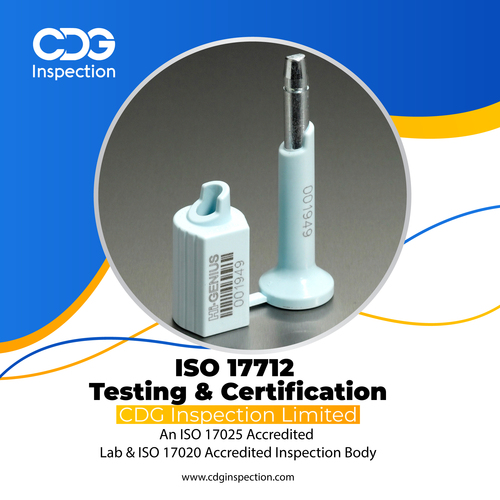
Tell us about your requirement

Price:
Quantity
Select Unit
- 50
- 100
- 200
- 250
- 500
- 1000+
Additional detail
Mobile number
Email

More Products in ISO 17712 Testing & Certification Category

 Send Inquiry
Our Products
- Quality Inspection
- Compliance Audit
- BIFMA Testing
- Registration/CoC
- Fire Safety Audit
- Electrical Safety Audit
- Pre-Shipment Inspection
- Third Party Inspection
- C-TPAT Audit
- Ingress Protection (IP) Testing
- Food Grain Inspection
- Oil & Fats Inspection
- Raw & Refined Sugar Inspection
- Animal Feed Inspection
- Factory Compliance Audit
- Industrial Safety Audit
- Green Audit Services
- Garment Inspection Services
- Container Loading Supervision
- Workplace Safety Audit
- ISO 17712 Testing & Certification
- Social Compliance Audit
- Fire Door Inspection
- Mechanical Security Seal Inspection & Testing
- Impact Protection Rating
- Electrical Testing Services

Plot No.- 37, IMT Manesar, Gurugram - 122051, Haryana, India

Mr. A. K. B
(a)
Mobile :08071792069
 Send Inquiry
 Send SMS
Developed and Managed by Infocom Network Private Limited.


