Back to top

MOQ : 1 Unit

Specification

  • Compliance Marking
  • Products conforming are to be labelled with EN 1729-1:2015
  • Related Standards
  • Referenced with EN 1729-2 for strength, stability and durability
  • Function
  • Defines functional sizes and requirements of chairs and tables
  • Intended Location
  • For indoor use in classrooms, computer labs, libraries
  • Application
  • Educational establishments, learning environments
  • Test Methods Reference
  • Reference for test methodology provided in companion standard EN 1729-2
  • Ergonomic Approval
  • Provides guidelines for ergonomic design of school furniture
  • Strength And Durability
  • Applicable intended use evaluated as per EN 1729-2:2012+A1:2015
  • Material Suitability
  • Applicable to furniture made from various materials
  • Safety Requirements
  • Provides specification for safety, ergonomics, and stability
  • Stackability
  • Standard covers stacking ability for chairs
  • Age Suitability
  • Covers furniture for age group 3 years and above
  • Standard
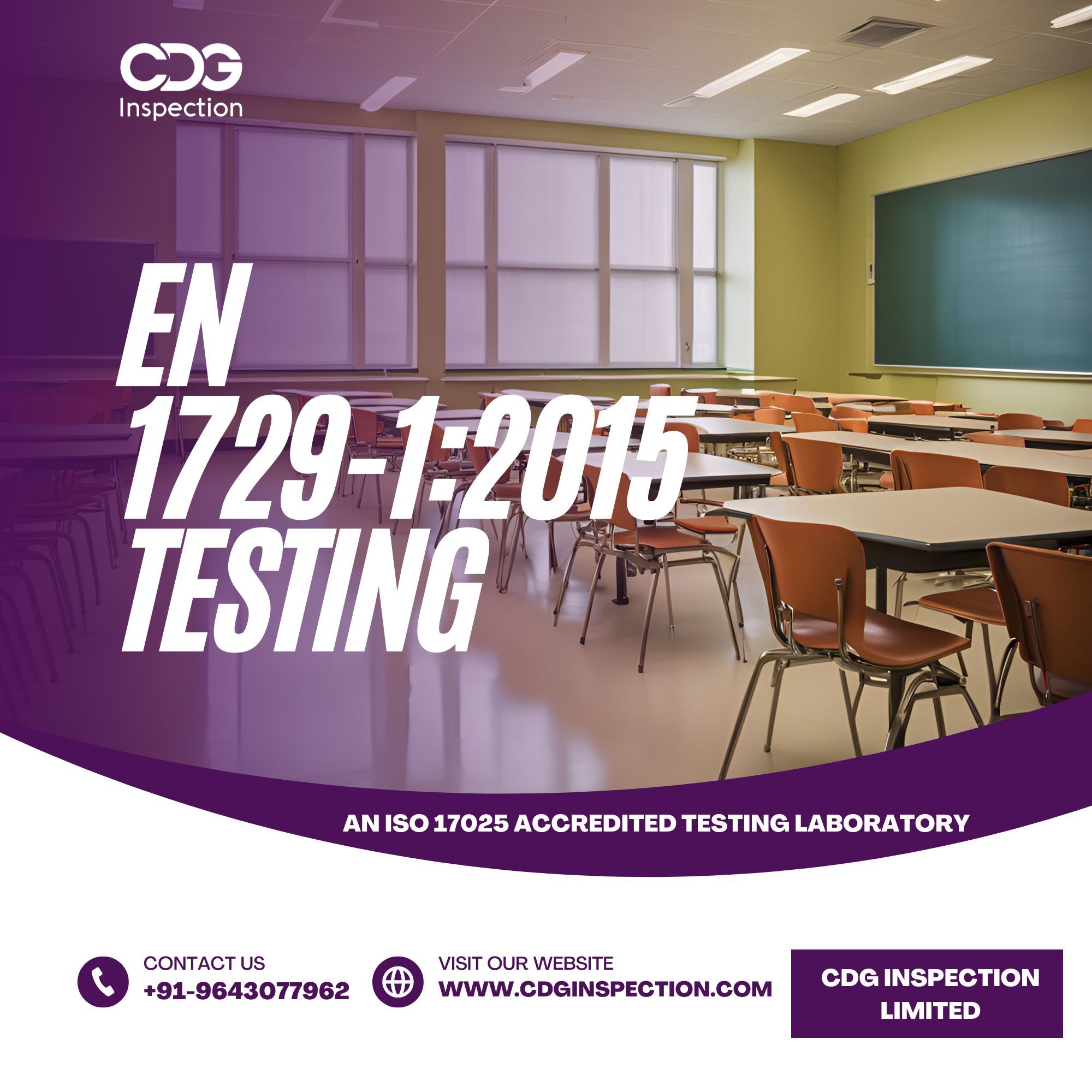
  • EN 1729-1:2015
  • Revision
  • Supersedes EN 1729-1:2006
  • Scope
  • Specifies dimensions and marking for movable and adjustable furniture
  • Chair Size Marking
  • Standard includes marking for correct seat heights and table heights
  • Product Category
  • Chairs and tables for educational institutions
  • Surface Finish
  • Specifies that surfaces must be free from sharp edges and burrs
  • Design Features
  • Standard outlines seat, backrest, and table dimensions
  • Colour Indication
  • Requires size marking by colour code per standard


About

EN 1729-1:2015 Testing Service for Chairs and Tables for Educational Institutions by CDG Inspection Limited


Ensuring that furniture used in educational settings meets rigorous standards is essential for creating a safe and functional learning environment. CDG Inspection Limited offers comprehensive testing services to ensure compliance with EN 1729-1:2015, which specifies the requirements for chairs and tables designed for use in educational institutions.


Key Aspects of EN 1729-1:2015 Testing

Durability Testing: We assess the durability of chairs and tables by simulating typical usage conditions. This includes testing the resilience of the furniture to repeated use, impact, and stress to ensure long-term reliability and performance.


Load Capacity Evaluation: Our tests determine the load-bearing capacity of educational furniture. We simulate various loading conditions to ensure that chairs and tables can support the weight of users and materials without compromising structural integrity.


Safety and Stability Assessment: We evaluate the stability and safety features of the furniture to ensure it does not tip over or collapse during use. This includes testing for stability under different conditions and assessing any safety mechanisms.


Functional Performance Testing: Testing includes evaluating the functionality of chairs and tables, such as ease of adjustment, comfort, and usability. We ensure that the furniture meets ergonomic standards and practical requirements for a learning environment.


Material Performance Analysis: We test the performance of materials used in educational furniture, including wood, metal, and synthetic materials. This includes assessing resistance to wear, impact, and other factors to ensure durability and safety.


Compliance Verification: We ensure that chairs and tables meet all relevant criteria of EN 1729-1:2015. This involves verifying that the design, construction, and materials comply with the prescribed standards for educational furniture.


Documentation and Reporting: We provide detailed reports on the test results, including compliance status and any identified issues. This documentation is crucial for regulatory compliance and for demonstrating that the furniture meets high quality and safety standards.


Benefits of EN 1729-1:2015 Compliance

Enhanced Durability: Compliance ensures that educational furniture meets high durability standards, reducing wear and extending the lifespan of chairs and tables in busy learning environments.


Improved Safety: Testing verifies that furniture is stable and safe, minimizing the risk of accidents and ensuring a secure environment for students and staff.


Operational Efficiency: Properly tested furniture enhances the functionality of educational spaces, improving comfort and usability for students and educators.


Regulatory Compliance: Adhering to EN 1729-1:2015 helps meet European safety and quality regulations, assisting manufacturers in meeting legal requirements and avoiding potential issues.


Market Access: Meeting these standards is essential for accessing various markets and meeting the requirements of educational institutions with strict safety and quality regulations.


Competitive Advantage: Demonstrates a commitment to high quality and safety standards, offering a competitive edge by showcasing your dedication to producing reliable and comfortable educational furniture.


संपर्क करें today to schedule your EN 1729-1:2015 testing and ensure your educational furniture meets essential quality and safety!


Ergonomic and Functional Design

EN 1729-1:2015 emphasizes ergonomic approval, ensuring that chairs and tables are optimally designed for students of varying ages and sizes. The standard specifies measurements for seats, backrests, and tabletops, helping to provide comfort and promoting good posture during learning activities. The guidance ensures that furniture is both user-friendly and functionally suitable for diverse educational settings.


Safety and Durability Compliance

A primary focus of EN 1729-1:2015 is the safety and stability of school furniture. It prescribes clear safety and ergonomic requirements, including specifications for surface finishes, edges, and materials. Testing methods for evaluating strength and durability are referenced through EN 1729-2, ensuring reliable performance and minimizing risks to students across all intended uses.


Marking and Colour Coding for Ease of Use

To assist users in identifying the correct seat and table heights, EN 1729-1:2015 requires size marking by a standardised colour-coding system. This not only enables quick selection but also facilitates compliance checks and classroom organisation. The mandatory EN 1729-1:2015 label assures that the product meets the required specifications and quality benchmarks.

FAQ's of EN 1729-1:2015 (Chairs and tables for educational institutions):


Q: How does EN 1729-1:2015 ensure ergonomic suitability of school furniture?

A: EN 1729-1:2015 provides specific guidelines for ergonomic design by defining measurements and proportions for chairs and tables based on user age groups, starting from 3 years old. These requirements help promote healthy posture and comfort in educational settings.

Q: What process must be followed to achieve compliance with EN 1729-1:2015?

A: Manufacturers must design and produce chairs and tables according to the dimensions, design features, and marking requirements specified in EN 1729-1:2015. Furniture must be tested for strength, stability, and durability as per EN 1729-2:2012+A1:2015, and labelled with standard-compliant markings, including colour codes for sizes.

Q: When is EN 1729-1:2015 applicable?

A: EN 1729-1:2015 is applicable when selecting or supplying chairs and tables for indoor educational environments such as classrooms, libraries, and computer labs, especially for students aged 3 years and above.

Q: Where should EN 1729-1:2015 marked furniture be used?

A: Furniture marked as compliant with EN 1729-1:2015 is intended for indoor use within learning environments, including schools, colleges, academic libraries, and computer labs.

Q: What benefits do schools gain by using EN 1729-1:2015 compliant furniture?

A: Educational institutions benefit from improved comfort, safety, and durability for students, with assured ergonomic standards, clearer selection guidance with colour-coded sizing, and minimized maintenance issues thanks to tested durability and compliant surface finishes.

Q: How are chair and table sizes indicated under EN 1729-1:2015?

A: The standard requires furniture sizes to be clearly marked, typically with a colour code system, making it easier to match students with appropriately sized chairs and tables and ensuring ongoing ergonomic suitability.

Q: Which materials are covered under EN 1729-1:2015 for educational furniture?

A: EN 1729-1:2015 applies to furniture made from various materials, provided they meet the safety, surface finish, and durability requirements specified in the standard.

Tell us about your requirement
product

Price:  

Quantity
Select Unit

  • 50
  • 100
  • 200
  • 250
  • 500
  • 1000+
Additional detail
मोबाइल number

Email

अधिक Products in बीआईएफएमए परीक्षण Category
EN 1725:1998 (Beds and Mattresses Testing)

माप की इकाई : Unit/Units

मूल्य या मूल्य सीमा : आईएनआर

न्यूनतम आदेश मात्रा : 1

ASTM F1561-96 (Plastic Chairs for Outdoor Use)

माप की इकाई : टुकड़ा

मूल्य या मूल्य सीमा : आईएनआर

न्यूनतम आदेश मात्रा : 1