
Call us now :08071792069
 Send Inquiry
 Send Inquiry
EN 1725:1998 (Beds and Mattresses Testing)
Price 50000.0 INR/ Unit
MOQ : 1 Unit
EN 1725:1998 (Beds and Mattresses Testing) Specification
- Main Tests Conducted
- Testing of strength, durability, stability, and safety for bedsteads and mattresses.
- Compliance
- Products conforming to EN 1725:1998 meet European safety and performance standards for beds and mattresses.
- Standard Number
- EN 1725:1998
- Performance Criteria
- Beds and mattresses must not show damage or dangerous faults after testing.
- Scope
- Specification for the safety, strength, and durability requirements and test methods for beds and mattresses.
- Testing Conditions
- Tested in laboratory conditions simulating normal and cyclic use.
- Technical Information
- Includes requirements for critical dimensions, stability, strength under vertical, horizontal, and in some cases, combined forces.
- Harmonized Category
- FurnitureBeds and sleeping products
- Relevant Product Types
- Single beds, double beds, bunk beds, cribs, spring mattresses, foam mattresses
- Standard Publication Year
- 1998
- Mattress Size Range
- Applies to a wide range of sizes in the domestic sector, both adult and childrens beds.
- Test Load Parameters
- Varies according to bed/mattress type; typically up to 1400 N for strength tests
- Application
- Applicable to domestic beds, including bedsteads, box springs, and mattresses.
- Test Equipment Required
- Compression apparatus, cyclic loading devices, measuring tools
- Test Cycles
- Durability tests may involve up to 10,000 cycles depending on test part
- Edge and Corner Testing
- Assessed to ensure stability and minimize risk of tipping or edge failure
- Manufacturers Marking Requirements
- Details for labelling, including identification marks and conformity statement
- Country/Region
- European Union
- Usage Environment
- Intended for normal indoor domestic use
- Structural Integrity
- Assessed under different loading and usage conditions to ensure safe use.
- Test Report
- A detailed report outlining each test conducted and results per EN 1725:1998 requirements
About EN 1725:1998 (Beds and Mattresses Testing)
EN 1725:1998 Testing Service for Beds and Mattresses by CDG Inspection LimitedEnsuring the safety, durability, and comfort of beds and mattresses is essential for providing quality sleep and meeting consumer expectations. CDG Inspection Limited offers specialized testing services to ensure compliance with EN 1725:1998, which specifies safety and performance requirements for beds and mattresses used in residential settings.Key Aspects of EN 1725:1998 TestingStructural Strength and Stability: We assess the overall strength and stability of beds and mattresses. Testing includes evaluating the framework, joints, and support systems to ensure they can handle the intended load and prevent collapse.Load-Bearing Capacity: Our tests determine how well the bed or mattress can support weight. This includes assessing static and dynamic loads to ensure that the product remains safe and functional under normal use.Durability Testing: We simulate long-term use to test the durability of beds and mattresses. This includes evaluating resistance to wear and tear, impact, and other stresses to ensure longevity and consistent performance.Safety Features: Testing includes checking for safety aspects such as sharp edges, gaps, and potential entrapment hazards. We ensure that the design and construction do not pose risks to users.Comfort and Support: We assess the comfort level of mattresses, including factors like firmness, support, and conformability. Ensuring that the mattress provides adequate support and comfort is essential for quality sleep.Material Quality: We test the materials used in beds and mattresses for safety and durability. This includes checking for harmful substances and ensuring that materials meet quality standards.Assembly and Stability: For beds, we test the ease of assembly and the stability of the assembled unit. This includes evaluating how well the bed remains stable during use and whether it meets safety standards when assembled.Benefits of EN 1725:1998 ComplianceEnhanced Safety: Compliance ensures that beds and mattresses meet rigorous safety standards, reducing the risk of accidents and providing peace of mind to users.Durability and Performance: Testing confirms that beds and mattresses can withstand regular use and environmental conditions, ensuring long-term durability and consistent performance.Consumer Confidence: Certification provides assurance to customers about the safety, comfort, and quality of the product, enhancing brand trust and satisfaction.Regulatory Compliance: Meeting EN 1725:1998 facilitates adherence to European regulations, aiding in market access and compliance with international standards.Market Advantage: Demonstrates a commitment to high safety and performance standards, offering a competitive edge in the market.CDG Inspection Limited offers thorough testing for beds and mattresses to ensure compliance with EN 1725:1998. Our advanced facilities and experienced team deliver accurate and reliable results.Contact us today to schedule your EN 1725:1998 testing and ensure your products meet the highest standards of safety and performance!
Comprehensive Testing and Equipment
The EN 1725:1998 standard employs compression apparatus, cyclic loading devices, and precision measuring tools to assess bed and mattress safety. Rigorous testing simulates real-life conditions, subjecting products to specific loads and cycles to evaluate strength and durability. These procedures ensure beds and mattresses perform reliably under normal domestic use.
Key Safety and Performance Criteria
This standard focuses on minimizing hazards by testing edge and corner stability, load-bearing capacity, and overall structural integrity. Products are evaluated for safety faults, damage, and resistance to tipping. Effective compliance with these criteria assures consumers of reduced risk when using beds and mattresses in a home environment.
Labelling and Compliance Documentation
EN 1725:1998 mandates clear labelling with manufacturer marks and a conformity statement. Test reports detail procedures performed and results achieved for full transparency. This documentation is essential for regulatory clearance and commercial distribution within the European Union market.
FAQ's of EN 1725:1998 (Beds and Mattresses Testing):
Q: How are beds and mattresses tested under EN 1725:1998?
A: Beds and mattresses are subjected to mechanical tests using compression apparatus and cyclic loading devices. These procedures evaluate strength, stability, and durability under simulated domestic conditions, ensuring products withstand regular use without developing faults.Q: What types of beds and mattresses fall under the scope of EN 1725:1998?
A: The standard applies to domestic beds such as single and double beds, bunk beds, cribs, as well as mattresses including spring and foam types intended for indoor household environments.Q: When is EN 1725:1998 testing required for beds and mattresses?
A: Testing is required before placing a new bed or mattress model on the European domestic market to ensure it complies with safety and performance standards outlined in EN 1725:1998.Q: Where are EN 1725:1998 tests conducted?
A: These tests are performed in accredited laboratories equipped with specialized test rigs that simulate regular and cyclic use, verifying the structural and safety performance of beds and mattresses.Q: What is the process for certifying compliance with EN 1725:1998?
A: Manufacturers must submit their products for laboratory tests covering load resistance, edge stability, and durability. Afterwards, each product must display proper labelling and be accompanied by a detailed test report demonstrating EN 1725:1998 compliance.Q: How does EN 1725:1998 benefit manufacturers and consumers?
A: For manufacturers, adherence to this standard opens access to EU markets and provides clear guidelines for product development. Consumers benefit by receiving safe, reliable beds and mattresses with proven strength and stability.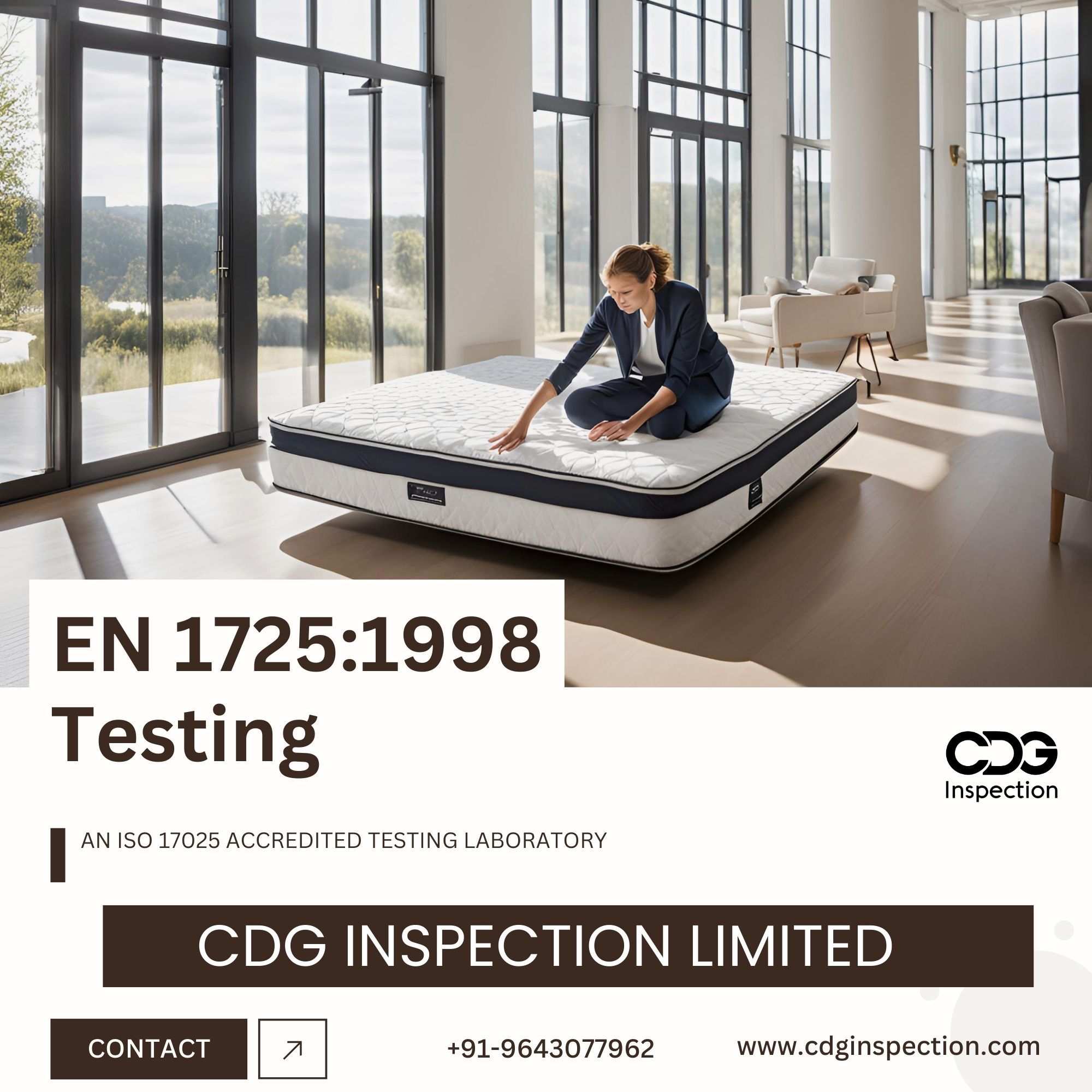


Tell us about your requirement

Price:
Quantity
Select Unit
- 50
- 100
- 200
- 250
- 500
- 1000+
Additional detail
Mobile number
Email

More Products in BIFMA Testing Category
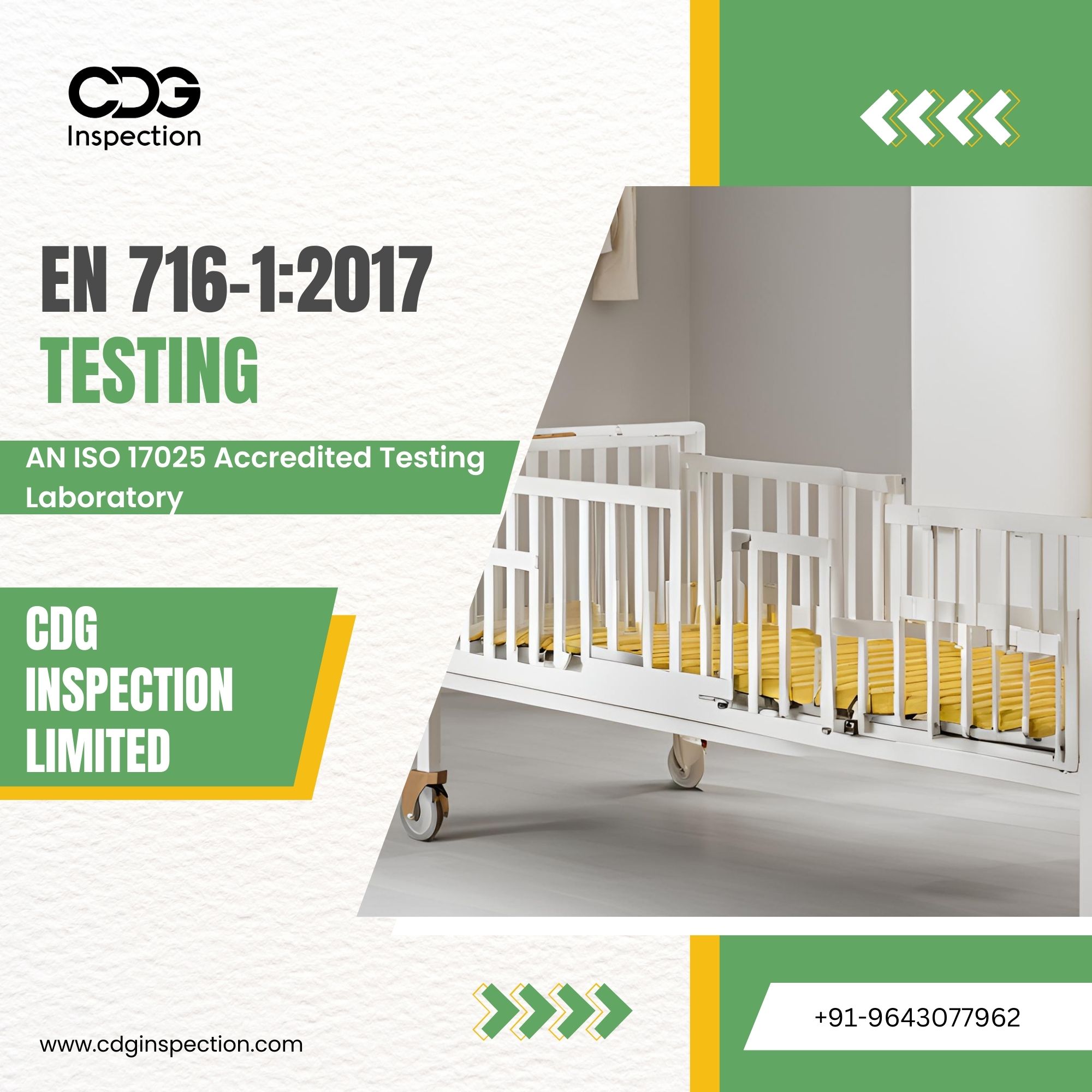
EN 716-1:2017 Testing (Children's Cots & Folding Cots for Domestic Use)
Price 50000.0 INR
Minimum Order Quantity : 1 Piece

EN 581-1:2017 Testing (Seating and Tables for Camping)
Price 50000.0 INR
Minimum Order Quantity : 1 Piece

EN 13150:2020 Testing (Workbenches for laboratories in educational institutions)
Price 50000.0 INR
Minimum Order Quantity : 1 Piece


 Send Inquiry
Our Products
- Quality Inspection
- Compliance Audit
- BIFMA Testing
- Registration/CoC
- Fire Safety Audit
- Electrical Safety Audit
- Pre-Shipment Inspection
- Third Party Inspection
- C-TPAT Audit
- Ingress Protection (IP) Testing
- Food Grain Inspection
- Oil & Fats Inspection
- Raw & Refined Sugar Inspection
- Animal Feed Inspection
- Factory Compliance Audit
- Industrial Safety Audit
- Green Audit Services
- Garment Inspection Services
- Container Loading Supervision
- Workplace Safety Audit
- ISO 17712 Testing & Certification
- Social Compliance Audit
- Fire Door Inspection
- Mechanical Security Seal Inspection & Testing
- Impact Protection Rating
- Electrical Testing Services

Plot No.- 37, IMT Manesar, Gurugram - 122051, Haryana, India

Mr. A. K. B
(a)
Mobile :08071792069
 Send Inquiry
 Send SMS
Developed and Managed by Infocom Network Private Limited.


