
Call us now :08071792069
 Send Inquiry
 Send Inquiry
Oil and Fats Inspection in Gwalior
Oil and Fats Inspection in Gwalior Specification
- Applicable Standards
- ISI, BIS, FSSAI, ISO
- Industry Application
- Food Processing, Edible Oil Manufacturing, Quality Assurance, Export/Import
- Client Support
- 24x7 Helpline
- Certification Provided
- Yes
- Payment Mode
- Offline/Online
- Location
- Gwalior
- Inspection Frequency
- On-Demand or Regular/Periodic
- Inspection Method
- Physical and Chemical Analysis
- Parameters Tested
- FFA, Moisture, Impurities, Color, Odor, Saponification Value, Iodine Value, Peroxide Value
- Language of Report
- English/Hindi
- Service Mode
- Offline
- Sample Size Requirement
- Minimum 500g
- Service Type
- Oil and Fats Inspection
- Expert Inspectors
- Qualified and Experienced Analysts
- Report Turnaround Time
- 1-3 Working Days
Oil and Fats Inspection in Gwalior Trade Information
- Main Domestic Market
- All India
About Oil and Fats Inspection in Gwalior
CIL Provides Accredited Edible Oil & Fats Inspection Services in Gwalior, Madhya Pradesh, India. Our ISO 17025 accredited laboratories perform all mandatory and many optional contractual methods on commodities traded under terms of International Contracts. CDG provide all mandatory and optional international contractual methods by performing recognized classical wet chemistry analysis for an extensive range of oilseeds, including oilseed rape, nuts, oils, fats, tallow, render, mixed acid vegetable oils, soaps and waxes, Groundnut oil, Rape, seed oil, Soya bean oil, Palm oil, Cotton seed oil, Olive oil, Tallow or render, Rape, seed, Sunflower seed, Linseed, Sunflower seed oil, Corn oil, Palm Kernel oil, Coconut oil, Rape, seed, Sunflower seed, Linseed, Sunflower seed oil, Corn oil, Palm Kernel oil, Coconut oil. ANALYTICAL SERVICES,CDG analysis of oils, fats and oilseeds laboratories in manesar provide fast accurate results and a comprehensive range of analytical services to the industry, Moisture, Impurities, Free fatty acids, FFA, Unsaponifiable matter, Density, Erucic Acid, Metal trace elements, Lovibond colour, Density, Erucic Acid, Metal trace elements, Lovibond colour. INSPECTION SERVICES, CDG approved cargo surveys and inspections, no matter where in the world your shipment is being transported. CDG Cargo Surveys include, Quality control, Quantity verification, ullage survey, Supervision of loading and or discharge, Sampling, Land tank inspection, Ship tank inspection, Container tank inspection, Loss prevention, Supervision of transfer to transport, Laboratory analysis, Certification, Consultancy. Rendering of animals to produce animal fats and animal feed can also involve biological hazards. Although most animals and animal materials used as a source for rendering are healthy or from healthy animals, a small percentage comes from animals that have been road, killed or have died of unknown causes and perhaps are diseased. Some animal diseases, such as anthrax and brucellosis, can also affect humans. Workers in slaughterhouses and rendering plants may be at risk. In India, people called knackers make their living going around the country side picking up dead animals and rendering them in their backyards. They could be at greater risk because of the greater likelihood of their exposure to diseased animals and the crude conditions they work under. The past rendering of sheep organs, including brains, as a source for cattle feed has resulted in bovine spongi form encephalopathy (mad cow disease) in some cows where the sheep had a brain disease called scrapie. It appears that some humans have developed this disease from eating beef from cows with mad cow disease. Periodic medical examination of workers, selection, training and supervision are aids in prevention of both accidents and occupational diseases. CDG can help with testing, analysis, assays, evaluations, examinations, inspections and certifications to different Fats, Oil, and Oilseeds test methods, standards, procedures or specifications. ISO 9832, ANIMAL AND VEGETABLE FATS AND OILS, DETERMINATION OF RESIDUAL TECHNICAL HEXANE CONTENT. ISO 10565, OILSEEDS, SIMULTANEOUS DETERMINATION OF OIL AND WATER CONTENTS, METHOD USING PULSED NUCLEAR MAGNETIC RESONANCE SPECTROMETRY. BIS, Sesame Oil, Specification. BIS 542, Coconut Oil, Specification. BIS 14636, Flexible Packaging Materials for Packaging of Edible Oils, Ghee and Vanaspati. BIS 16311, Olive Oil Specification. ISO 11053, VEGETABLE FATS AND OILS, DETERMINATION OF COCOA BUTTER EQUIVALENTS IN MILK CHOCOLATE. NSAI 23275, ANIMAL AND VEGETABLE FATS AND OILS, COCOA BUTTER EQUIVALENTS IN COCOA BUTTER AND PLAIN CHOCOLATE, PART 2, QUANTIFICATION OF COCOA BUTTER EQUIVALENTS. USDA, Olive Oil and Olive, Pomace Oil Grades and Standards. ASTM D500, Standard Test Methods of Chemical Analysis of Sulfonated and Sulfated Oils.
Comprehensive Analytical Testing
Our inspection process embraces both physical and chemical analysis of oils and fats, assessing essential parameters such as FFA, moisture, impurities, color, odor, saponification value, iodine value, and peroxide value. This comprehensive approach guarantees that the tested samples meet stringent quality benchmarks for diverse industry needs.
Strict Adherence to Standards
Inspections are carried out according to trusted national and international standards, including ISI, BIS, FSSAI, and ISO. This ensures that your oil and fat products are not only safe and compliant but also suitable for domestic and global markets.
Fast Reporting & Expert Support
With a minimum sample requirement of 500g, our efficient testing allows for a swift report turnaround of just 1-3 working days. Detailed certificates are issued, and our experienced analysts remain accessible through a 24x7 helpline for any support or guidance.
FAQ's of Oil and Fats Inspection in Gwalior:
Q: What parameters are tested during oil and fats inspection in Gwalior?
A: Our inspection covers Free Fatty Acids (FFA), moisture, impurities, color, odor, saponification value, iodine value, and peroxide value using both physical and chemical analysis techniques.Q: How does the inspection process work, and what is the sample size requirement?
A: To schedule an inspection, provide a minimum sample of 500g. Our qualified analysts conduct thorough tests on-site in Gwalior, ensuring both compliance and quality. Reports and certifications are generated after complete testing.Q: When can I expect the inspection report and in which languages is it available?
A: Inspection reports and certifications are delivered within 1-3 working days from sample receipt, and are available in both English and Hindi to suit client preferences.Q: Where are the services offered and are they suitable for export/import requirements?
A: Services are available across Gwalior, India. Our inspections align with ISI, BIS, FSSAI, and ISO standards, making them suitable for food processing, edible oil manufacturing, and export/import requirements.Q: What are the benefits of regular oil and fats inspection?
A: Routine inspection helps identify quality issues early, ensures compliance with relevant standards, improves product consistency, and supports your brand's reputation in both domestic and international markets.Q: Is certification provided after inspection, and who performs the analysis?
A: Yes, certification is issued after testing. All analyses are performed by highly qualified and experienced inspectors for reliable and credible results.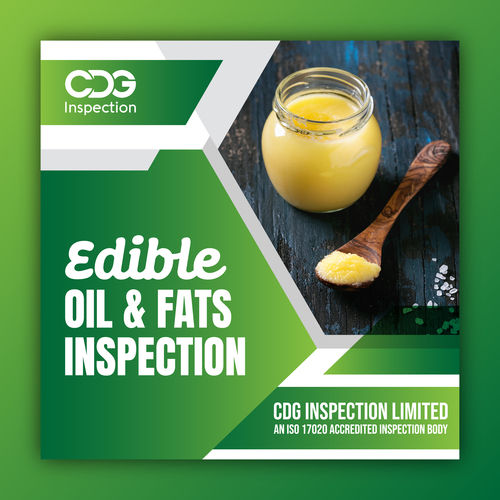
Tell us about your requirement

Price:
Quantity
Select Unit
- 50
- 100
- 200
- 250
- 500
- 1000+
Additional detail
Mobile number
Email

More Products in Oil & Fats Inspection Category


 Send Inquiry
Our Products
- Quality Inspection
- Compliance Audit
- BIFMA Testing
- Registration/CoC
- Fire Safety Audit
- Electrical Safety Audit
- Pre-Shipment Inspection
- Third Party Inspection
- C-TPAT Audit
- Ingress Protection (IP) Testing
- Food Grain Inspection
- Oil & Fats Inspection
- Raw & Refined Sugar Inspection
- Animal Feed Inspection
- Factory Compliance Audit
- Industrial Safety Audit
- Green Audit Services
- Garment Inspection Services
- Container Loading Supervision
- Workplace Safety Audit
- ISO 17712 Testing & Certification
- Social Compliance Audit
- Fire Door Inspection
- Mechanical Security Seal Inspection & Testing
- Impact Protection Rating
- Electrical Testing Services

Plot No.- 37, IMT Manesar, Gurugram - 122051, Haryana, India

Mr. A. K. B
(a)
Mobile :08071792069
 Send Inquiry
 Send SMS
Developed and Managed by Infocom Network Private Limited.


